Welcome!

A collection of musings on movies and life, by a man who has no idea what it all means.

Saturday, March 10, 2012

A Streetcar Named Desire (1951)

A short post today, as I am tired and would like to go to bed. But I just watched Elia Kazan's 1951 classic "A Streetcar Named Desire," and I feel that it merits some journalistic attention before I retire.

Sometimes, it can be difficult to contextualize classic films, for the very reason that we have seen newer films that borrow, sometimes quite liberally, from the innovations of its predecessors. Consider, for instance, The Magnificent Seven; ignoring that it is a derivative of Kurosawa, the modern audience is tempted to think of the film as cliché from top to bottom, simply because we are familiar with the Western conventions. However, historically, I would perhaps group The Magnificent Seven in with High Noon, The Man Who Shot Liberty Valance, and The Searchers as four films that ushered in the era of Westerns as "High Art" - films to be taken seriously. The film does not exist in a vacuum, in other words; and while we recognize some elements of Unforgiven in Steve McQueen's speech, it is important to remember which movie came first.

Unfortunately, neither can our analysis exist in a vacuum, and we are foolish to try to push our cinematic experiences out of mind when we experience a new (to us) movie. Often, when we are reminded of another film, it allows us to create comparisons for the sake of evaluation. With this in mind, I perceived three films to be particularly valuable in comparison to Streetcar: Gone With the Wind, The Shining, and The Grand Illusion. I will look at each of these comparisons briefly.

Gone With the Wind is perhaps the most obvious comparison. Both films star Vivien Leigh as an economically struggling Southern belle whose identity is defined by confines of property, propriety, and Southern aristocracy. In one, she is blonde; in the other, a redhead. Neither character is particularly likeable, to be frank. The primary distinction is that GWTW ends with Scarlett O'Hara returning to the hope that is embodied in Tara - her inherited, unearned property that, despite everything, assures her a sense of security and purpose in a world that is turned upside-down by the Civil War. This ending is, at best, rather entrenched in the Southern antebellum class system - hardly a victory for feminists everywhere (ironically, Rhett, although he's kind of a dick, seems more understanding of the world and how it is changing. Historically speaking, his actions are probably the more enlightened and progressive. There is a lot of criticism of Scarlett out there which you can read if you'd like; I won't go into it too much here). By contrast, Blanche DuBois has lost the family estate, and the loss of it has probably contributed to what we realize throughout Streetcar is her mental illness. She has delusions, anxiety, an inappropriate fixation on the past, distrust of men, etc. It is what it is, I suppose. However, before you castigate my analysis for being dismissive of Blanche's plight, and claim that it is the unfairness of the patriarchal system in which she lives that is to blame, consider that Blanche wants nothing more than to return to that very same system, and even as she is losing her mind, she creates delusions of absconding with a Houston millionaire. Yes, the system is unfair. I won't debate that. But Blanche's situation is compounded by her unwillingness to seek an alternative, as did her sister Stella. Of course, it's not that simple, but it can't be claimed that no options are given. GWTW and Streetcar make much the same philosophical point, and neither present much of a victory for opponents of the oppressive Southern aristocratic system.

The Shining may be a stretch, I concede, so I'll be brief here. But it struck me while watching Blanche slowly lose her grip that the director, Elia Kazan, was essentially blurring the film's diegesis for dramatic effect, and that Kubrick does much the same thing, also to depict mental illness. However, perhaps as a function of the advancements in filmmaking, The Shining certainly provides more bang for my metaphorical buck; Blanche DuBois makes us feel as though we are watching a crazy person, but Jack Torrence makes us feel like we are a crazy person. There's a difference. And the net effect for Streetcar is that our sympathies for Blanche are somewhat diminished, I think, and her character remains not quite "one-dimensional," yet not quite not, either. Perhaps that's neither here nor there, but that was my thought as I watched.

However, I was most struck by a comparison to another 1939 classic (the first being GWTW), Jean Renoir's The Grand Illusion. If you haven't seen this movie, you should. But essentially, both it and Streetcar deal in large part with the failing and entropic demise of the aristocracy, the latter in the American South and the former in Europe during World War One. This is a complicated comparison, since the films are so different, and certainly we could try to genderize some of the arguments about each, but the important point here is that the characters in Grand Illusion are self-aware about their situation, and honest enough to acknowledge it in discourse with one another. By contrast, only Marlon Brando, as Stanley Kowalski, opines with such awareness in Streetcar. Perhaps it's not comforting that the most truthful and insightful character in Streetcar is an alcoholic, abusive, chain-smoking mumbler with an anger management problem, but then Tennessee Williams is never really all that cheerful. My point is that if you would like a more intellectual approach to this complicated issue, then Renoir may provide a more subtle and nuanced avenue.

A final note on the acting: I mentioned that Blanche is rather one-dimensional, as is Stella, more or less. This may not be totally fair. In the early 1950s, Marlon Brando gave perhaps four of his greatest performances in Streetcar, Julius Caesar, The Wild One, and On The Waterfront. Probably not until Al Pacino in the 1970s would an actor put together four performances of that quality in that short a period of time. However, The Wild One is not a very good film overall, and On The Waterfront and Caesar both have terrific supporting casts. Looking solely at the quality of acting, Marlon Brando simply dominates Streetcar. No one else really comes that close.

It's a good film, but except for Brando's performance, it's not a great one. I would, however, like to see it on stage, where I think expressive acting (Brando's forte) would be less important than the delivery of dialogue.

Tuesday, January 17, 2012

The Benefits of Bad Movies - Part 1


Over the course of my nearly twenty-three years now, I have been characterized on several occasions as a "film snob." Shocking, I know. I suppose that's what I get for unintentionally offering some, um, patronizing opinions on the cinematic habits of my friends.

Well, here's the thing: I've decided that I don't care about being a snob. In fact, I kind of relish it. I have a film degree; shouldn't that afford me a certain degree of snobbery? But in an effort to ameliorate some of the frustration in my general direction, the first post of the new year will be an homage to the bad - bad directing, bad acting, and most of all, bad movies. Be forewarned: this post is entirely my opinion, and does not necessarily reflect the view of anyone else. If you disagree, by all means, comment, as profanely as possible, so that I can mock you for being offended at something you read on the internet.

Contrary to popular belief, and due to a failing of the English language, being a bad movie is not always such a bad thing. Let's take a look, for example, at the two highest-grossing movies of the young year: the entirely predictable success of the emo-romance twaddle that is The Twilight Saga: Breaking Dawn, Part 1 and the completely unexpected, but still ridiculous The Devil Inside. Let's not sugarcoat this here: these movies are both pieces of metaphorical crap. I haven't even seen them, and I know this. How do I know this? Well, I have a highly sophisticated system: I read reviews and I watch trailers. And I have a few other tricks, which I'll get to.

First off, I read reviews. Like in every other part of news, it is important to identify the credibility of a reviewer. Credibility is established through education, experience, and reputation, in unequal measure. I would love to say that I have enough of all of these to call myself credible, but of course I really only have part of one - a B.A. that includes a film emphasis. So who to read? Well, think about the source's purpose. What does People magazine, for instance, try to do? Sell magazines. Who do they sell to? Generally, from my research, dentist's offices, where they lie abandoned on lobby end-tables. So for someone like myself, who wants to read film criticism for the sake of film criticism (rather than for profit), where should I turn? Well, there are a couple of critics that I have grown to really like and respect: A. O. Scott, of The New York Times, and Roger Ebert, of the Chicago Sun-Times. Remember, these are people who have seen many, many more films than you and I, and can therefore offer a great deal of perspective. And believe it or not, neither are really that pretentious. If you have doubts, please read Ebert's review of Freddy Got Fingered. It's totally worth it: http://rogerebert.suntimes.com/apps/pbcs.dll/article?AID=/20010420/REVIEWS/104200304/1023

The other useful source of criticism that I use is meta-evaluation of films. In this, I use three websites: IMDb, Rotten Tomatoes, and MetaCritic. Again, however, it is important to use the evaluative tools correctly. MetaCritic, for instance, allows viewers quite simply to compare the scores given to films by professional critics against the reviews given by, for lack of a better word, amateur moviegoers like you and me. Rotten Tomatoes allows for the same comparison, with one additional mouse click. IMDb's rating system actually allows for a great deal of differentiation, but makes no distinction between professional critics and amateurs. LISTEN TO ME BECAUSE THIS IS IMPORTANT: None of these rating tools will tell you if a movie is bad or good! But it will help you understand a little bit more about whether it will appeal to your tastes. Think about it: if the critics love it and the Proletariat hates it, it's probably not Twilight. Let's take a look:

Breaking Dawn, Part 1:
http://www.metacritic.com/movie/the-twilight-saga-breaking-dawn---part-1
http://www.imdb.com/title/tt1324999/
http://www.rottentomatoes.com/m/twilight_saga_breaking_dawn/

In all of those review sites, the film received between a 4.4 and a 4.9 aggregate score out of 10. So this is a quality check: will you like this movie? Maybe, but not if you're looking for a technically sound movie. As for myself, I have no interest in sparkly vampires, or really, more or less any kind of vampires (with a couple exceptions), so I have not, and will not, pay money to see the movie in theaters. Boom. Done. Decision made.

So why do I bring all this up? It's because I do, in fact, believe that there is a lot we can learn from so-called "bad movies." Take a look at the photo I chose to preface this post with: Randal Graves, debating the existence of an, um, mythical being called "Pillowpants." This scene, from Clerks II (originally titled The Passion of the Clerks), can hardly be called great cinema. But for those of us who know what the scene is designed to imitate - the kitchen from the Overlook Hotel in The Shining - this conversation develops a great and ironic three-dimensionality. Does that make it a classic movie moment? Hell no. But it does help us understand how we define "good" and "bad" in a relatively objective manner. This evaluation has two parts; the quality of film depends on our ability to both objectively compare films to each other, and also to accurately assess the efficacy of the intellectual and emotional responses that a film evokes.


...to be continued...

Thursday, October 20, 2011

Moneyball (2011)

It takes a lot for me to see a movie more than once. Admittedly, I saw Inception six times in the theaters, but that was kind of a special case: it was an interesting story, a visually striking film, and Ellen Page is totally cute. So when I decided to go see Moneyball a second time, I knew it must merit some serious attention.

I went into Moneyball with high expectations the first time, having read and enjoyed the book from which it originates earlier in the year. What intrigued me most about this film as an adaptation is that the book is not, in and of itself, a great story. Pieces of the book rely rather heavily on a solid grounding in baseball statistics, and, while it isn't absolutely necessary to be a stats-savvy baseball junkie such as myself, it certainly doesn't hurt. But the movie dances around many of the scarier metrics (VORP, WAR, OPS+) and instead chooses to focus almost entirely on Brad Pitt's portrayal of Oakland As general manager Billy Beane. However, there were still major challenges to overcome. Unlike high school or college sports, Major League Baseball is big business, and individual players are relatively unimportant. It is difficult to show an inspirational sports moment when central scenes in the movie involve Jonah Hill crunching numbers on his laptop.

I have read that Pitt's insistence on completing this movie is one of the reasons it did eventually wrap; without his determination and stubbornness (and a surprise cameo by Leonardo DiCaprio as an executive producer), Moneyball almost certainly would have never moved beyond the initial drafts. This is not the first time Pitt has forced a project to its finished form - the lengthy title of The Assassination of Jesse James by the Coward Robert Ford was literally written into Pitt's contract for that movie - and I certainly hope it is not the last. Pitt saw a story that needed to be told, and insisted that it was. The question I wondered was, how would director Bennett Miller do it?

Moneyball tackles this problem, ironically enough, by taking itself more seriously as a film than it might have. By that I mean that it never forgets what it is, and never really asks us to, either. Some films - action and sports films, especially, in my opinion - tend to ask us to suspend our disbelief and become hugely emotionally invested in the characters. Don't get me wrong, I appreciate this as much as anyone, and I still shed a tear every single time I watch Invictus or Remember the Titans. But Moneyball takes a different tack. It is replete with intertitles, cutaways to division standings, newspaper clippings, and real game footage from 2002. The sound is manipulated just as patently; lengthy voice-overs move the story forward at key moments. It feels like we are watching a documentary at times, and in a way, we are. What Miller and Pitt (I feel that both deserve credit for this) accomplish by focusing on Beane's story is a blurring of genres, and an introduction of a touching side into what could easily have been an emotionally blank slate.

I felt that this film-school technique worked extremely well, but I must offer a caveat: it will not be for everyone. I say this especially because the second time I saw the film, I sat in front of an elderly couple who were, ahem, confused and put off by this somewhat avant-garde method of storytelling. Their method of decoding the film involved talking it over in that special whisper that one develops at age seventy that is just a smidge, forty decibels or so, louder than is appropriate at the movies. When I am old, I wish to have my own small movie theater. That way, I will never bother anyone when I talk during movies. And popcorn will be cheaper.

Go see this film. I promise you, even if you aren't a baseball fan, you will enjoy Pitt's performance and the way Miller orchestrates what is, all things considered, a very complex tale. I would be surprised if this film isn't in the conversation for Best Picture and Best Actor, along with a handful of technical awards, come February.

And please don't talk during the movie.

Friday, October 7, 2011

The Ides of March (2011)

There was a scene, about an hour of the way through The Ides of March, when I realized why this was a good, not a great, film. In this scene, a character gets into the backseat of an SUV. We know what's going on. It's nothing good, or at least nothing honest. But the scene drags on too long, and before you know it, the character gets out, the car drives off, and we get a facial reaction shot. The scene is effective, but anticlimactic because it could have been so much more. It could have been so much more, ironically, by being so much less. Why does George Clooney (who both directed and co-stars in the film) choose to end the scene this way? I wish I had the answer to that. Because Ides is, at heart, a political thriller, and thrillers are built on suspense. By showing us what we should already know, Clooney removes any remaining suspense.

Let's take a look at the two scenes that I feel epitomize what I'm talking about here. The first is the opening scene from Orson Welles's Touch of Evil. This is a 3+ minute long take that starts with a shadowy figure planting a bomb in the trunk of a car. Then the car drives off, and we don't get the payoff (in this case, an explosion, but it could be anything) until after we have been introduced to another major storyline and several other characters. That's not to say we have forgotten about the bomb. Rather, we have to wait, and the waiting is the best part. That the car does eventually explode is inevitable. But here's the thing: the longer you wait in suspense, the more thrilling the result is. In this case, you see the result right away. But the principle is the same. Welles gave us three and a half minutes; Clooney gives us thirty seconds.

The real crown jewel here though is from the master of suspense himself, Alfred Hitchcock. There is a scene in Frenzy that gives me chills thinking about it: woman is lured into apartment by murderer, door closes, camera dollies backwards down stairs. And then around a corner. And then down more stairs. And then out of the building. And then across the street. The scene is almost excruciatingly long. We know, we know that she is being strangled to death. But Hitchcock never shows us! Never! And it's amazing! And here's why: suspense operates on the very simple premise that our minds, if properly manipulated, will always do a better job of freaking itself out than it will if you show everything. Tons of film theory backs this up, but that's perhaps a talk for another day. That's not to say that I disliked the film. I actually really liked it. I'm just being critical to prove a point.

The truth is, George Clooney has developed a real talent for picking movies that make the viewer think, generally pretty hard, generally about politics - to the point that I almost consider him an auteur of sorts. You know, one that just makes political films. As a political science major, I appreciate this. With the election coming up next year, a film about the evils of electoral politics seems rather apropos. Any qualms I have concerning the content of the film is reflective not of its efficacy, but my predisposition against electoral politics. But I see Ides as a continuation, not an individual piece of art. It is a continuation of a body of work that includes Good Night, and Good Luck and Syriana. Are either of those films perfect? No, of course not. But together, the three films bring us a little closer to realizing Clooney's vision.

And what a vision it is. Government (Ides), international relations (Syriana), and the media (Good Night, and Good Luck) all certainly have their very, very ugly sides. Clooney shows us all of this without batting an eye. Not bad for a guy whose big break was on ER.

As a side note, this is nothing new for Clooney. If you get a chance - check out The Thin Red Line. If you're willing to take the three hours to dedicate to it, you won't be disappointed.

Thursday, September 29, 2011

Despicable Me (2010)

There is, perhaps, no elegant way to begin an essay about this movie that doesn't leave something out. In Despicable Me, we have an unabashedly silly animated film that uses every trick in the book to appeal to the broadest market possible, while still maintaining some cohesion as a story. In this it succeeds, but just what that means for the film itself is quite another matter.

Like many of my peers, I grew up with a steady diet of some of the great animated films of the past century. Many happy days were spent watching the classics of Disney, and when new ones - Aladdin and its sequels, The Lion King, Mulan, Pocahontas, and Fantasia 2000, just to name a few - hit the big screen, I soaked those up with all the vim and vigor a slightly neurotic prepubescent could muster. But as we all now know, the world of animation was in transition. With Toy Story and A Bug's Life, Pixar was changing the way we look at animated films; the introduction of the "Best Animated Feature" category at the Oscars allocated some long-overdue accolades to films that had long been passed over for major hardware (Beauty and the Beast, which lost to The Silence of the Lambs in 1991, remains the only animated film considered in a 5-nomination format). Nor were Disney and Pixar the only production companies devoting serious effort (and money) into legitimizing animation's seat at the table of respectable film.

The genesis of this trend, if you consider it, has as much to do with the expansion of filming techniques (live-action and animated) as anything else. Consider the state of film in 1937: Snow White and the Seven Dwarfs revolutionized the animation world with its use of a moving camera to capture depth of field. IMDb lists Jean Renoir's Grand Illusion as the next most popular film of the year - a tremendous film, to be sure, but as cinematically different as could be imagined. Visual effects and post-production as we think of them now were unthinkable; it would be no more possible to create an animated Gone With The Wind in the style of Cinderella with 1939 technology than it would be to do the inverse. Now, fast-forward sixty-four years or so, and we find entire scenes in The Matrix Reloaded that have been completely integrated with computer generated figures, as well as characters digitally captured and given life only on computers (such as Andy Serkis' Gollum from The Lord of the Rings). Sixty years ago, all of these images would have to be captured in-camera, a daunting task for anyone trying to film the Neo-Smith fight from Reloaded; good fucking luck finding sixty identical siblings to play Agent Smith.

All of this history really boils down to this: our improvements in technology and filmmaking have, in the last two decades, allowed us to significantly blur the line between reality and surreality and fantasy. There's a simple reason Tron sucked and Tron: Legacy was awesome; the sequel could create a world that felt real enough to for an audience to believe it for two hours. Animated films rely on this suspension of disbelief even more heavily than do more "realistic" movies, but our collective expectation as an audience has been irreversibly altered. Now more than ever, we look to animation for reality and, sadly, we accept reality as a freak show and a carnival fun house. A glance at today's headlines might tell you that this may be the only way the real world makes sense.

It is with all this in mind that I finally turn to Despicable Me. The plot is fairly straightforward, and hinges on our anti-hero, Gru (Steve Carell), experiencing a change in his evil ways after his heart is won over by his adopted daughters, who he is manipulating to steal a shrink ray. It doesn't matter why; in the end, everything works out happily, and we are left to wonder how much fun Carell, Jason Segel, and Russell Brand must have had in the studio together whilst recording their voiceovers. This is an animated movie, a term formerly synonymous with "kid's movie." It's that, too, and although I can't fault it for what it is, I wish it had explored some deeper ground; aside from some well-timed film references, including one to The Godfather that had me laughing out loud, there's not much new here. Its lack of real depth frustrated me as I watched, and I couldn't help but think of Ratatouille and Up and the other groundbreaking "kid's movies" of recent years. In fact, even in 2010 there were probably two or three other animated films that merit more serious discussion, because they weren't afraid to go the extra mile in storytelling. What a waste of some awesome animation and voice talent.

I will, however, give this to Despicable Me. It offers, through the three little girls whom Gru adopts, almost a clinic in characterization. Watch the movie again and notice how instantly and subtly the audience is introduced to the girls. We get a sense that they are real people; they have a back-story, distinct personalities, and although we very rarely see any one of the three independent of the other two, they are vastly more interesting than any supporting character I can think of in any Pixar film. As an educator, I appreciated the effort that went into these characters, and I appreciated that Gru would pay enough attention to the children to let himself be positively affected. We as adults too often fail to consider what is right, or what is best, for children. Why is that? Our distance from childhood most certainly does not enable us to understand it better. But this film treats the girls with dignity and respect while still allowing them to just be kids. We could learn something from this.

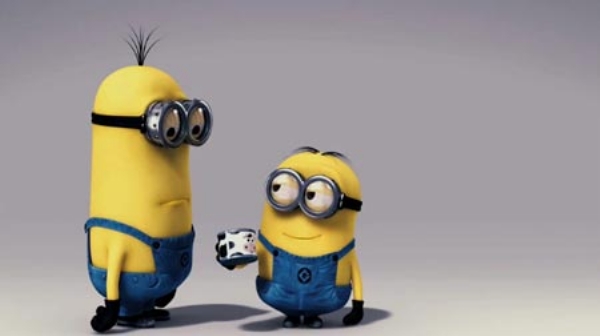
Oh yeah, and there are minions.

Tuesday, September 27, 2011

Chinatown (1974)

I concede that starting this blog off with an essay about what many critics consider to be one of the ten best movies of all time seems a bit like shooting fish in a barrel. One that has no water in it. I say to you haters... well, yes, it is kind of like that. However, it's also the movie I've watched the most recently, so I'm going to do it anyway.

Films noirs are in many ways the hipsters of the movie world. What sets them apart from other genres is a stubborn insistence on violating accepted conventions of popular movies. Think about this: the first great noir film in many peoples' minds, Double Indemnity, broke all sorts of rules (sort of - I'll come back to that): the entire movie is told in a voiced-over narration, stars a genuine anti-hero, takes place almost exclusively at night, and so on. It's classic noir, and it's a great film.

So why do I bring this up? Well, to begin with, I am of the persuasion that noir did not arise organically simply as a reaction to the Yankee Doodle Dandys of the early 1940s. Rather, noir borrowed, rather liberally, from the experiences of the great German Expressionist films of the 1920s and 30s. This influence permeates Double Indemnity, as it does The Maltese Falcon, Kiss Me Deadly, and countless others. We as a culture miss out on this more often than not because... well, to be honest, it can be unpleasant to watch the Expressionist films. Most Americans don't run to the video store (or Netflix) to order a film that is subtitled and black and white, and eighty years old to boot. We are the poorer for it. I recommend that each and every one of you go now and watch Nosferatu and The Cabinet of Dr. Caligari. I'll wait.

(waiting...)

Back? Good. So by now you'll understand what I mean when I claim that the noir traditions of chiaroscuro lighting, canted cinematography, and visual phantasmagory are distinct holdovers from an earlier vision of cinema.

I give all this background in order to say this: Chinatown is most certainly in the noir tradition, but represents such a radically different vision of the genre, and executes it so well, that classical noir comes to an end with this film. In truth, the transition had already begun; Robert Altman's The Long Goodbye had established the viability of "neo-noir" as its own concept. What sets Chinatown apart, however, is its willingness to self-consciously straddle the two worlds of old and new, and create something altogether unique.

The plot is familiar to us. Woman hires detective to follow husband. Detective discovers secrets. Lies are exposed. Detective realizes too late what side he should be on. Many of us could sit down and outline a workable script from this bare-bones outline.

But Chinatown is not content to give us this formula. Here is a movie that expects and demands that its audience pay attention to every detail. Without the traditional voice over narration, we are in the dark (though most of the movie takes place in bright sunlight) along with Jack Nicholson's Detective Gittes; we discover clues as he discovers them, and when his misled, so are we. Comprehension remains tantalizingly out of reach, and as soon as we think we know something, we are faced with the reality that what we do know may mean nothing anyway. We are so wrapped up in the petty details that we forget to realize the existential hole that is being created around us.

Director Roman Polanski gives us a bleak vision of the world, but empowers us to make up our mind about the film's morals. That's a lot of responsibility to give a guy sitting on his couch with a bag of Cheetos and a Coke. It's probably more than we deserve.


Recommendations from this post: Double Indemnity, Kiss Me Deadly, Nosferatu
Related Recommendations: The Last Laugh, The Usual Suspects

There's a first for everything.

If you had asked me, four years ago, or still better a decade ago, whether I thought I would be starting a blog about movies, I would have looked at you like you were crazy. Now, of course, that non-dream has been to an extent realized, and the long years of not waiting have come to a close. It's funny how that works out.

The point is, I never intended to be publishing my thoughts on much of anything in any sort of a public forum, as I have long been afflicted with a crippling self-consciousness. When you live your whole life feeling as though you are on display, there for the judging, it is I think understandably difficult to allow peers into that strange little world we call oneself. And besides, I never felt as though I had anything new to contribute to the public discourse. It is, of course, easy to use this as an excuse, and I seized upon that opportunity to escape from what I perceived as the already-judging eyes of the world.

Recently, however, I've realized something: that attitude is bullshit. I do have things to say, dammit! And, for better or for worse, I'd like to say them. As for topics, well, that was easy. I've been a movie fanatic for a number of years, watching several thousand movies in the last six years or so and somehow getting graded on my ability to analyze film. (As an aside, if you ever have the chance to take a class where your homework involves watching Singing in the Rain and eating pizza, I recommend you go for it.) The old axiom says, "write what you know." Well, I know film. So that's what this is all about.

Well, maybe not all about. You see, film to me is not just a series of images on the screen. To me, the experience of film watching and film making are truly two sides of the same coin. You can't get one without an equal measure of the other. What I intend this blog to do is examine each film I discuss holistically and with some immediacy. Naturally, my experiences are not universal, and it would be disingenuous for me to ask you to agree with me all the time. But I hope that my presentations of these films - be they reviews, analysis, or what have you - make you think about film in a different and somewhat deeper way. Feedback is appreciated. And, as a caveat, I reserve the right to discuss whatever the hell I want as part of this film corner. That's why I included the "etc." up above.

I'm glad you found my little corner in this series of tubes we call the Internet. Here's hoping you like what you find.